
 русский
  English
 عربى
عربىDark Blue/White Tarpaulin Manufacturer: The Cover That Works in Both Directions
A tarpaulin covers things. Hay bales. Construction materials. Truck loads. Scaffolding. The dark blue side faces the sun. The white side faces the cargo. Each color does a specific job. The dark side absorbs UV and resists degradation better than light colors. The white side reflects heat away from whatever is underneath and provides a brighter working environment for crews operating beneath the tarp. A dark blue/white tarpaulin manufacturer produces dual-color covers in weights from lightweight shade cloth to heavy-duty truck tarps. The lamination, the weaving, and the finishing all determine whether the tarp survives one season or five.
The Two-Color Design That Works for a Reason
Single-color tarps exist. Blue tarps are everywhere. Green tarps cover lumber. But a tarp with one color on each side is a tool, not just a cover. The dark blue outer layer is formulated with UV stabilizers that slow the degradation caused by constant sun exposure. Polyethylene without UV stabilization turns brittle and cracks within months of outdoor use. A dark blue/white tarpaulin manufacturer compounds UV inhibitors directly into the polyethylene film before lamination so the protection is through the material thickness, not just sprayed on the surface.
The white inner layer reflects sunlight instead of absorbing it. Under a dark tarp, the temperature climbs and the air gets stagnant. Under a white interior, the heat load drops and the space stays cooler. For livestock shelters, event tents, and temporary workshops, the white underside makes the covered space usable during hot weather. A dark blue/white tarpaulin manufacturer that controls the pigment loading in the white layer produces a surface that stays white over time instead of yellowing or turning translucent.
Light transmission through the tarp is a function of the fabric weight and the lamination thickness. Heavier tarps block more light. Lighter tarps allow some light through, which can be useful for covered growing areas or daytime construction sites where artificial lighting is not available. A dark blue/white tarpaulin manufacturer offers different weight grades that correspond to different light transmission levels so the buyer can match the tarp to the application.
The Weave and Lamination That Determine Strength
A tarpaulin starts as a woven polyethylene fabric. High-density polyethylene tape is extruded, stretched, and woven into a fabric that provides the tensile strength. A dark blue/white tarpaulin manufacturer specifies the weave density in picks per inch and the tape denier to determine the base fabric strength. A loose weave with thin tapes tears easily and stretches out of shape. A tight weave with thicker tapes resists tearing and holds its dimensions under tension.
Lamination bonds the colored polyethylene film to both sides of the woven fabric. The lamination process melts the film onto the fabric under heat and pressure. A dark blue/white tarpaulin manufacturer that controls the lamination temperature and pressure produces a bond that does not delaminate when the tarp is folded, dragged, or flapped in the wind. Delamination starts at the edges and spreads inward until the tarp is two layers of film with loose fabric between them.
The finished tarp weight is measured in grams per square meter. Lightweight tarps in the 80 to 120 gsm range work for temporary covers and shade cloth. Medium-weight tarps around 180 to 220 gsm cover scaffolding and construction materials. Heavy-duty tarps at 280 gsm and above handle truck covers and long-term outdoor storage. A dark blue/white tarpaulin manufacturer stamps the weight on the label so the buyer knows what they are getting without cutting a sample and weighing it.
Here is what a properly built dual-color tarp delivers:
- UV-stabilized polyethylene film on both sides, compounded into the material
- White inner layer with controlled pigment loading for heat reflection
- Woven HDPE fabric core with consistent picks per inch and tape denier
- Lamination bond that holds through folding, tension, and wind loading
Edge Finishing and Attachment Points
A tarp fails at the edges first. The fabric frays. The lamination peels. The grommets pull out. A dark blue/white tarpaulin manufacturer finishes the edges with a folded hem that is heat-sealed or stitched with high-tenacity thread. The hem doubles the material thickness at the perimeter and provides a reinforced base for grommet installation.
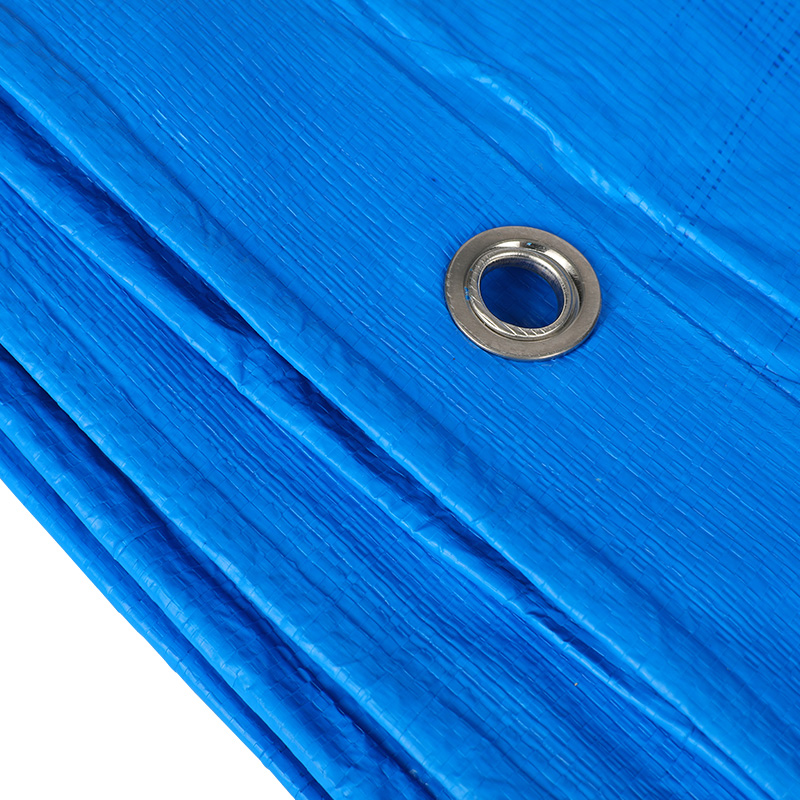
Grommets are the attachment points. Every rope, bungee, and tie-down pulls on a grommet. A dark blue/white tarpaulin manufacturer uses brass or stainless steel grommets set into reinforced corners and spaced along the hem. Grommets set into single-thickness fabric pull out under moderate tension. Grommets set into the reinforced hem zone hold the tarp secure in windy conditions.
Corner reinforcement goes beyond standard hemming. The corners take stress from multiple directions simultaneously. A dark blue/white tarpaulin manufacturer adds triangular corner patches or extra layers of fabric at each corner before setting the grommet. A corner that rips out makes the entire tarp unusable until it is patched.
What Happens When a Cheap Tarp Fails Early
The color goes first on a low-quality tarp. The dark blue fades to pale gray. The white underside yellows and becomes translucent. A dark blue/white tarpaulin manufacturer that uses pigments and UV stabilizers rated for years of outdoor exposure produces a tarp that holds its color and its protective properties through the rated service life.
The lamination fails next. The film separates from the fabric. Water gets between the layers and sits against the weave. The fabric degrades without UV protection from the film. A dark blue/white tarpaulin manufacturer that bonds the layers properly and seals the edges prevents the delamination cascade that turns a tarp into scrap.
A dark blue/white tarpaulin covers things that need protecting. Hay that has to stay dry. Steel that has to stay rust-free. Workers who need shade. The tarp spends its life in the sun, wind, and rain. Choose a dark blue/white tarpaulin manufacturer that stabilizes the material, bonds the layers, and reinforces the edges. The tarp will cover what it is supposed to cover until the job is done. That is the entire reason it exists.
Ваш адрес электронной почты не будет опубликован. Обязательные поля отмечены *

Информация
+86-15967922255
No. 859, Huafeng Road, Jindong District, Jinhua City, Zhejiang Province, China
Авторское право © Jinhua Donglin Tarpaulin Daily Products Co., Ltd.
